
When discussing roles within the pup community, much attention is often given to the pups themselves. However, another important role plays a significant part in many relationships, packs, and communities: the Handler.
Often viewed as mentors, guides, organisers, and trusted companions, Handlers provide support, structure, encouragement, and care in a variety of ways. While every Handler relationship is unique, the role is commonly built upon trust, communication, mutual respect, and genuine connection.
At its heart, being a Handler is not about control—it’s about guidance, responsibility, and helping others thrive.
What Is a Handler?
A Handler is someone who takes on a supportive role within the pup community, often forming a close bond with one or more pups.
Some Handlers participate in structured relationships with clearly defined roles and expectations. Others simply enjoy offering mentorship, friendship, guidance, or support without formal dynamics.
There is no single way to be a Handler.
Some are experienced community members who help newcomers navigate their journey. Others organise events, support local Packs, or simply provide a trusted presence that others can rely upon.
The role can look different for every individual and relationship.
The Foundation of Trust
Trust is often considered one of the most important elements of any Handler relationship.
Whether the relationship is social, mentoring-based, or centred around pup play, trust creates the foundation that allows both individuals to feel comfortable, respected, and understood.
Strong Handlers recognise that trust is earned through:
- Honesty
- Consistency
- Reliability
- Respect
- Communication
- Accountability
Without trust, meaningful guidance becomes difficult. With it, relationships can flourish.
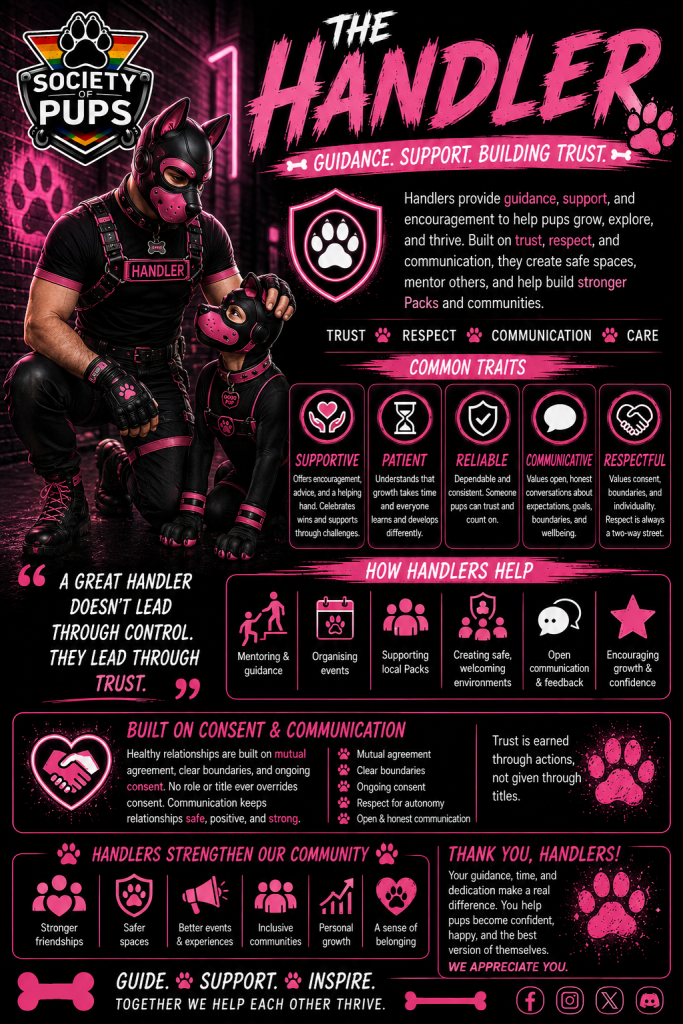
Common Traits of a Handler
While every Handler brings their own personality and approach, several qualities are frequently associated with the role.
Supportive
Many Handlers enjoy helping others grow and succeed.
They often provide encouragement, reassurance, and practical advice while celebrating achievements and helping pups overcome challenges.
Patient
Learning, self-discovery, and personal growth take time.
Good Handlers understand that every individual’s journey is different and avoid placing unnecessary pressure on others.
Reliable
Dependability is one of the qualities most commonly valued in a Handler.
Knowing that someone can be trusted to listen, provide guidance, or offer support helps strengthen relationships and build confidence.
Communicative
Open and honest communication is essential.
Many Handlers prioritise clear conversations about expectations, boundaries, goals, and wellbeing to ensure that relationships remain healthy and positive.
Respectful
Great Handlers understand that respect is a two-way process.
They value consent, individuality, personal boundaries, and the autonomy of the people they support.
Guidance Rather Than Control
One of the biggest misconceptions about Handlers is that their role revolves around authority or control.
In reality, the most effective Handlers often focus on guidance rather than direction.
They help others:
- Build confidence
- Develop skills
- Explore interests safely
- Navigate challenges
- Make informed decisions
- Grow as individuals
Rather than making choices for others, they provide support that empowers people to make their own decisions.
True guidance helps people become stronger, not dependent.
Supporting New Pups
Many Handlers enjoy helping newcomers discover the community.
For those entering the pup community for the first time, there can be many questions:
- Where do I start?
- What gear do I need?
- How do I meet other pups?
- What do different roles mean?
- How can I find local events?
Experienced Handlers often help answer these questions, providing reassurance and helping newcomers feel comfortable and welcomed.
This mentorship plays an important role in creating inclusive and supportive communities.
Leadership Within the Community
Beyond individual relationships, many Handlers contribute to the wider community through leadership and organisation.
They may:
- Organise meetups and events
- Support local Packs
- Moderate online communities
- Mentor new members
- Promote community standards
- Help create safe and welcoming environments
Their involvement often helps strengthen local groups and create opportunities for meaningful connection.
Consent and Communication
Any discussion about Handler roles must include consent.
Healthy Handler relationships are built upon:
- Mutual agreement
- Open communication
- Clearly understood boundaries
- Respect for personal autonomy
- Ongoing consent
No role or title ever overrides consent.
Good Handlers understand that communication is a continuous process and that relationships work best when everyone feels safe, respected, and able to express their needs honestly.
Challenges Faced by Handlers
Supporting others can be rewarding, but it also comes with responsibility.
Handlers may sometimes experience pressure to:
- Always have the right answers
- Support multiple people simultaneously
- Resolve conflicts
- Take responsibility for others’ wellbeing
- Balance leadership with personal needs
Like everyone else, Handlers benefit from support, friendship, and opportunities to focus on their own wellbeing.
Strong communities recognise that caregivers and mentors need care too.
Can Anyone Be a Handler?
Absolutely.
Being a Handler is not determined by age, status, experience level, or how long someone has been involved in the community.
Many people naturally develop Handler qualities through patience, empathy, reliability, and a genuine desire to help others.
Some discover the role through mentorship. Others through leadership, friendship, or community involvement.
Ultimately, the title matters far less than the qualities behind it.
Why Handlers Matter
Communities thrive when people invest in one another.
Handlers often help create the supportive environments that allow individuals and communities to grow. Through guidance, encouragement, trust, and communication, they help others build confidence, form meaningful relationships, and discover their place within the community.
At Society of Pups, we believe that strong communities are built through mutual respect, friendship, and support. Handlers contribute to all three by helping others learn, grow, and feel valued.
Their role is not to stand above the community, but to stand alongside it—offering guidance, encouragement, and a helping hand whenever it is needed.
Because the best Handlers don’t lead through authority.
They lead through trust.
Play. Connect. Belong. 🐾