

Within every community there are those who thrive in groups, enjoy constant social interaction, and love being surrounded by others. But there are also those who value independence, personal freedom, and the ability to explore life on their own terms.
These are often known as Lone Pups.
While pack culture is a central part of the pup community, not every pup feels the need to belong to a formal pack or group. Many find fulfilment through self-discovery, individual experiences, and forging their own unique path while still appreciating the wider community around them.
Being a Lone Pup isn’t about isolation—it’s about independence.
What Is a Lone Pup?
A Lone Pup is someone who values personal autonomy and prefers to navigate their pup journey without relying heavily on pack structures or group dynamics.
Some Lone Pups have never joined a pack. Others may have previously belonged to one and later chosen a more independent lifestyle. Many enjoy attending events, participating in discussions, and making friends while maintaining a strong sense of personal freedom.
For them, the ability to choose their own direction is one of the most rewarding aspects of their identity.
Independence Doesn’t Mean Isolation
One of the most common misconceptions about Lone Pups is that they prefer to be alone all the time.
In reality, many Lone Pups are active members of the community. They attend socials, participate in discussions, volunteer at events, and build meaningful friendships.
The difference is that they often prefer relationships that are flexible rather than structured around pack dynamics or defined roles.
A Lone Pup may enjoy spending time with many different people without feeling the need to formally belong to a single group.
Common Traits of a Lone Pup
Every Lone Pup is unique, but several characteristics are often associated with the role.
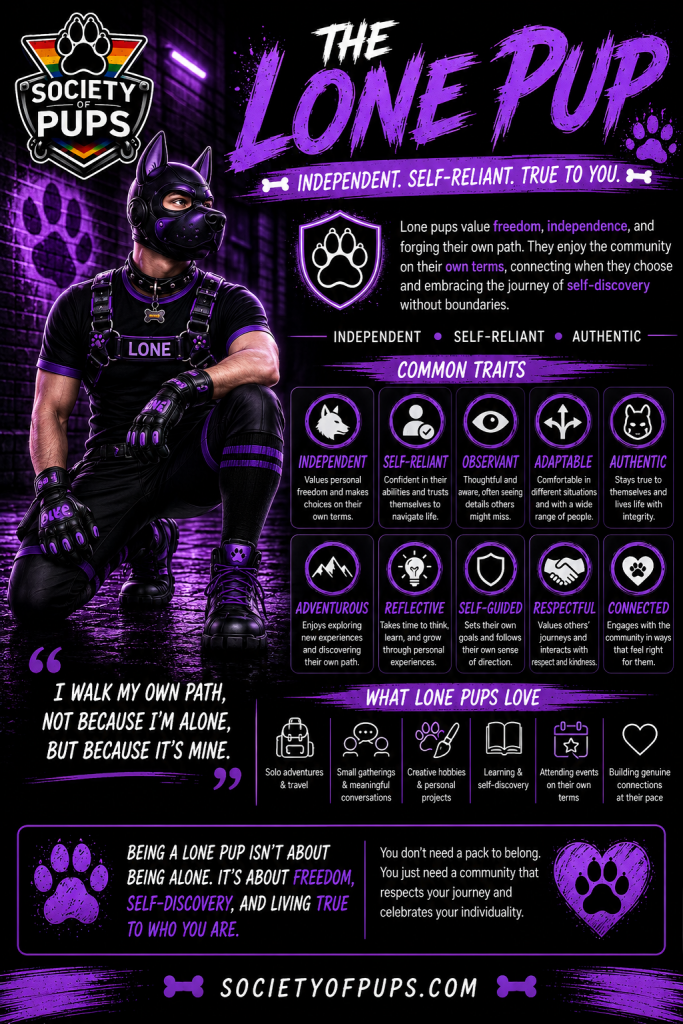
Independent
Freedom is often one of the most important values for Lone Pups.
They enjoy making their own decisions, setting their own goals, and exploring their interests without feeling restricted by expectations or group obligations.
Self-Reliant
Lone Pups often develop strong problem-solving skills and confidence in their abilities.
They are comfortable taking initiative, learning independently, and navigating challenges on their own terms.
Observant
Without the constant influence of group dynamics, many Lone Pups become thoughtful observers.
They often notice details others miss and take time to consider situations carefully before acting.
Adaptable
Because they frequently move between different social circles and experiences, Lone Pups are often highly adaptable.
They can comfortably engage with a wide range of personalities, communities, and environments.
Authentic
Many Lone Pups place great importance on being true to themselves.
Rather than following trends or expectations, they prefer to express their identity in ways that feel genuine and meaningful.
Walking Your Own Path
One of the defining aspects of being a Lone Pup is the freedom to create your own experience.
There is no requirement to fit a particular mould.
Some Lone Pups enjoy:
- Solo adventures and travel
- Small social gatherings
- Creative hobbies and projects
- Independent learning and exploration
- Meeting new people without formal commitments
- Attending events at their own pace
Their journey is guided by personal choice rather than external expectations.
Strength Through Self-Confidence
Being comfortable with independence often requires confidence.
Lone Pups frequently learn to trust their instincts, make decisions for themselves, and embrace who they are without relying on validation from others.
This confidence can inspire those around them, demonstrating that belonging to a community does not always require fitting into a predefined role.
Sometimes the strongest sense of identity comes from simply being yourself.
The Value Lone Pups Bring to a Community
Although they may not seek leadership positions or formal responsibilities, Lone Pups contribute valuable perspectives to the community.
They often bring:
- Independent thinking
- Fresh ideas and viewpoints
- Creativity and innovation
- Honest feedback
- Adaptability and resilience
- Strong individual friendships
Their experiences can enrich discussions and help communities remain open-minded and inclusive.
Challenges Faced by Lone Pups
Choosing independence can sometimes come with its own challenges.
Lone Pups may occasionally experience:
- Misunderstandings about their desire for independence
- Assumptions that they are antisocial
- Difficulty finding like-minded individuals
- Pressure to join groups or adopt certain dynamics
However, most Lone Pups simply value having the freedom to engage with the community in ways that suit them best.
Respecting those choices helps create a more inclusive environment for everyone.
Can a Lone Pup Still Be Part of a Pack?
Absolutely.
Being a Lone Pup does not mean rejecting friendship or community.
Many Lone Pups have close friendships, attend regular events, and actively support their local communities. Some may even move between periods of independence and pack involvement throughout their lives.
Identity is rarely fixed, and there is no requirement to remain within a single role forever.
The most important thing is finding what feels right for you.
Why Lone Pups Matter
Healthy communities are built from a wide variety of personalities, perspectives, and experiences.
Lone Pups remind us that there is no single way to participate in the community. Their independence, self-confidence, and authenticity demonstrate that belonging is not about conforming—it’s about finding a place where you can be yourself.
At Society of Pups, we celebrate every path, whether it leads through a large pack, a close group of friends, or an independent journey of self-discovery.
Because community is strongest when people are free to participate in the way that suits them best.
After all, sometimes walking your own path is exactly what helps you discover where you truly belong.
Play. Connect. Belong. 🐾
Next in our Understanding Roles series: The Pack Pup – Together We Thrive.